Local detail
When It Stops Being a DIY Job
Most houses here went up between 1938 and 1987, with the median around 1961, so a lot of original torsion springs and tracks are still hanging on past their design life. If your door has an unbalanced torsion spring from that era, a bent track, or an opener gear that's stripped from years of fighting a heavy steel panel, that's not a weekend project with a socket set and a YouTube tab open. Torsion springs store enough force to break a wrist or worse, and on houses this old the mounting hardware is often rusted to the point where it strips or snaps the second you put a wrench to it.
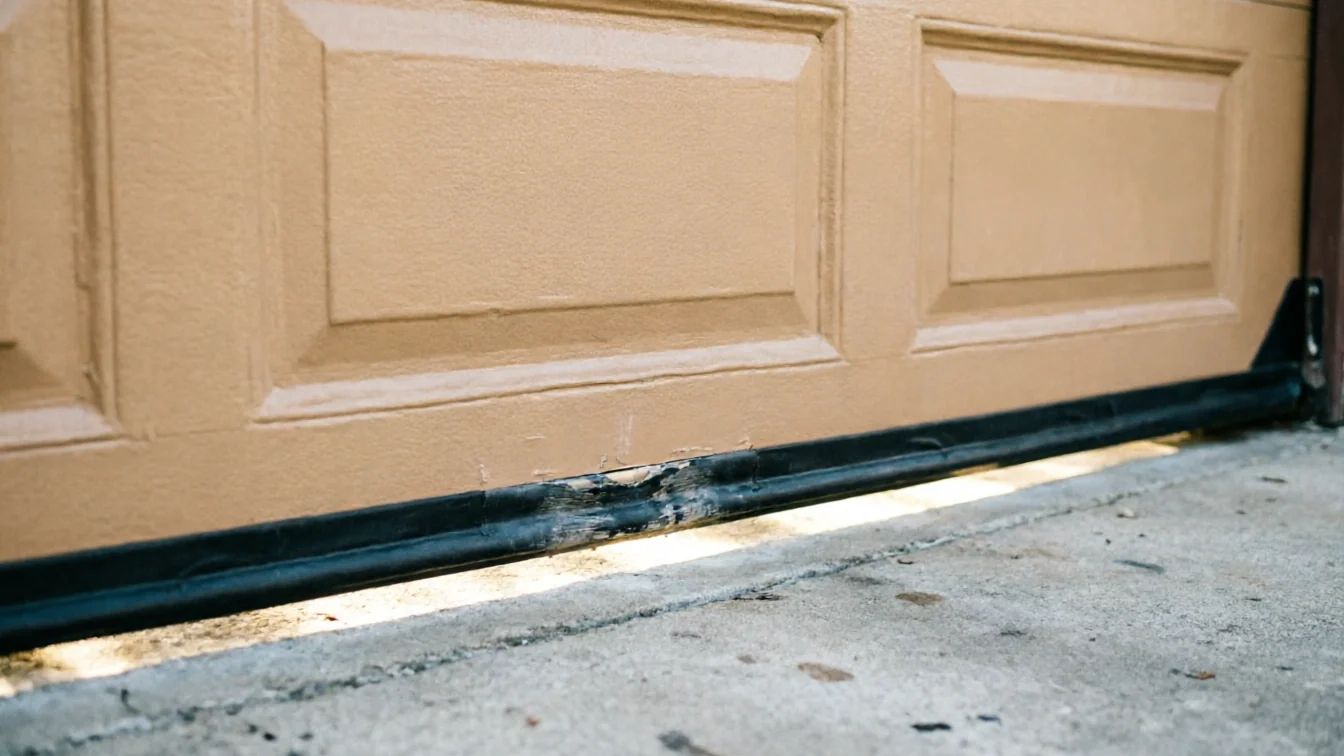
Where DIY still makes sense: tightening loose hinge bolts, replacing worn weatherstripping, lubricating rollers, or swapping a dead remote battery. Where it doesn't: anything involving the spring, the cable drum, or a door that's come off the track entirely. We won't pretend every call needs a truck - sometimes a $12 part from a hardware store fixes it. But once the door won't hold position on its own, or the cable looks frayed, that's a call, not a project.
The area
What Local Conditions Do
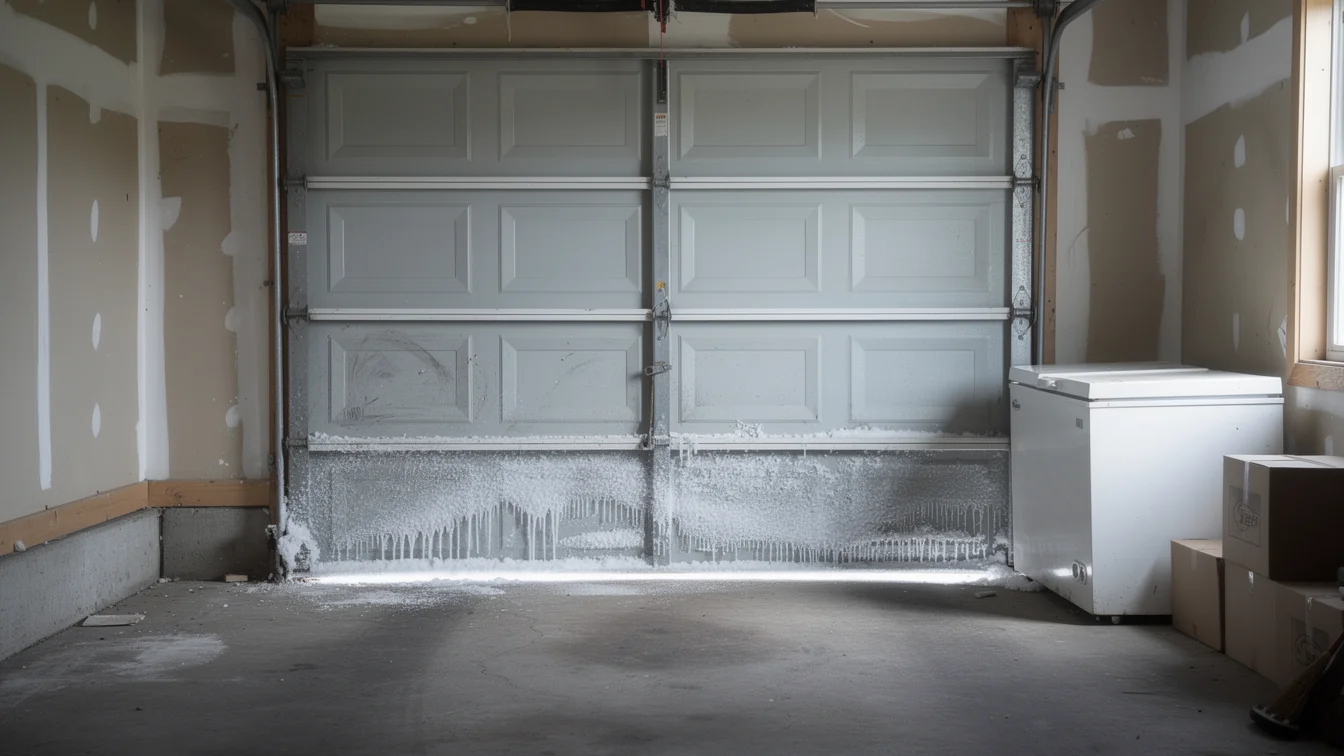
Syracuse sits in a severe cold climate band, and that matters more for a garage door than most people think. Steel springs lose temper faster in repeated hard freezes, which means a spring rated for a certain number of cycles in a mild climate gives out sooner here. Lubricant thickens below freezing, so rollers and hinges that moved smoothly in September start binding by January, putting extra strain on the opener motor and the spring both.
On houses from the 1960s and 70s build era that makes up most of this housing stock, doors were often installed without the insulation standards that came later, meaning the steel panel itself contracts and expands more with the swing between a 70-degree garage in summer and single digits in deep winter. That constant flex loosens panel seams and hinge screws faster than it would in a milder climate. It's one reason a door that's been fine for years can suddenly start sagging or binding the first hard cold snap of the season - the hardware was already worn, and the cold just finished the job.
What we find
What Is Going On
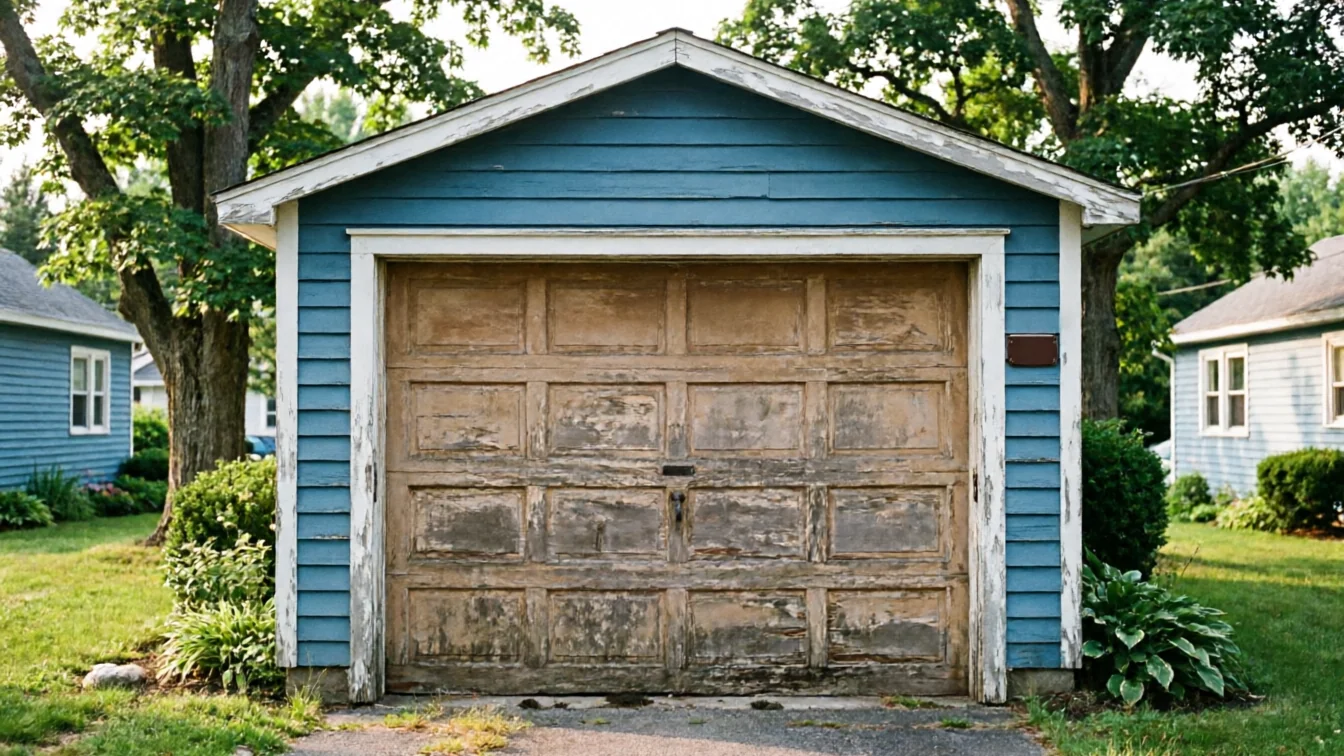
Across neighborhoods from Westside to Eastwood to Lyncourt, and out through Solvay, De Witt, and Mattydale, most garage doors share that same 1960s-70s build era, so the same worn end bearings and brittle spring metal show up street after street, not just in one pocket of town. With 75,232 owner-occupied houses across the service area, a sizable share of them still carry the single-layer steel doors common to that build period, with no foam core to buffer the temperature swing between garage and outdoors.
What that usually means in practice: a torsion spring that's cycled tens of thousands of times since installation, cables that have started to fray where they wrap the drum, or rollers that have worn their bearings down to bare metal and now rattle instead of roll. None of that shows up as an emergency until the day it does - a spring that's been weakening for a year snaps on the coldest morning, not gradually. That's the pattern we see most in this kind of housing stock, and it's why a door that's been quiet for a decade can suddenly stop working overnight.
How we work
What to Check
Before you call anyone, a few things are worth a look. Stand the door half-open and let go - if it drifts down or shoots up on its own, the spring tension is off and that's a spring problem, not an opener problem. Check the cables on either side of the door for fraying or rust, especially near the bottom bracket. Listen for grinding or popping during a normal open-close cycle, which usually points to a bearing or roller near the end of its life.
Look at the track alignment too - a gap between the roller and the track, or a track that's visibly bent, means the door is riding wrong and forcing the opener to work harder than it should. If the door is heavy to lift by hand with the opener disconnected, that's a sign the spring is already compromised. At a median household income of $76,094, most owners here aren't signing off on a full door replacement without being sure the spring or track is really the problem first - and that's a fair instinct. A lot of what looks like
Talk to a local pro
Garage door trouble in Syracuse?
Same-day service with honest, upfront quotes.