Syracuse, NY
Garage Door Cable Repair for Syracuse Homes
Broken or frayed garage door cables are common in Syracuse's 1960s-era housing stock and cold winters. See why it happens and what the repair involves.
- Garage Door Repair
- New Door Installation
- Springs & Openers
Where This Job Goes Sideways
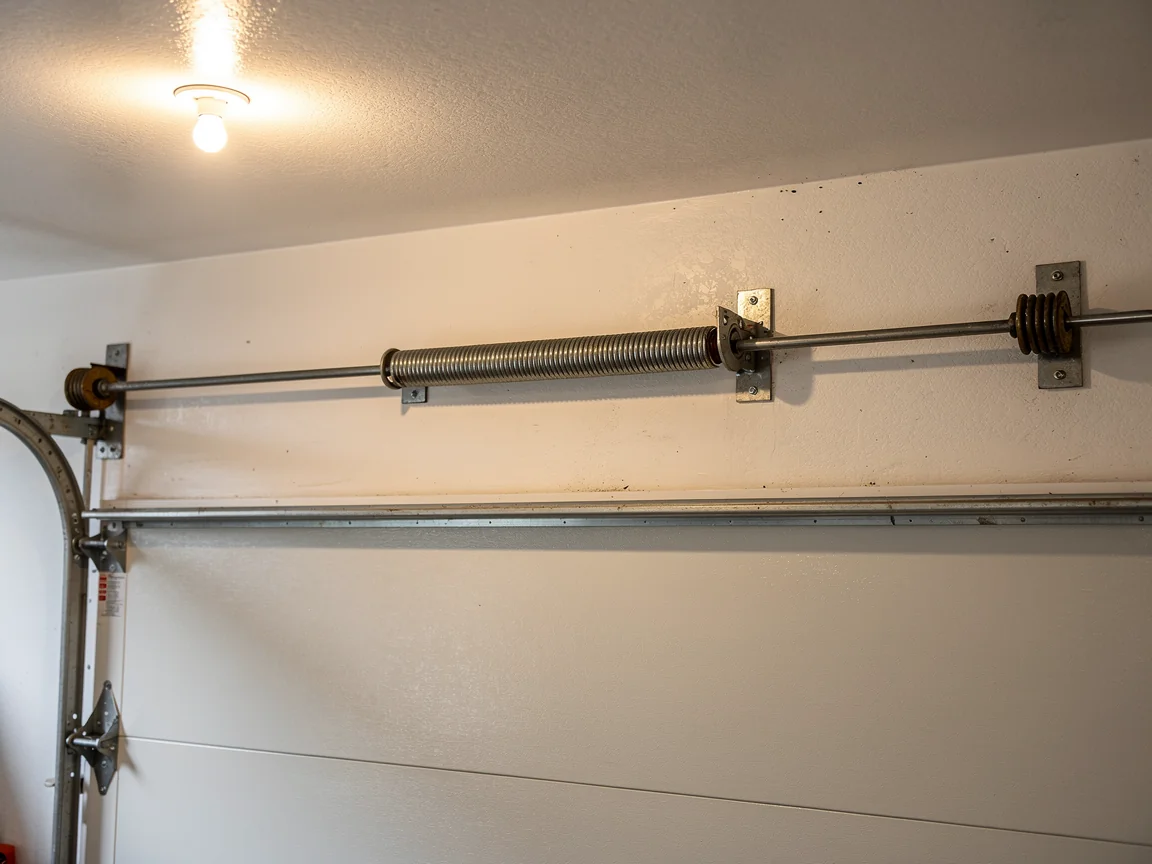
Cable repair is simple when it's just the cable. It stops being simple when the cable snapped because something else failed first - a seized bearing, a bent drum, a spring that was already past its wind count. Install a new cable on a worn drum and you're back out in a year. The other place this goes wrong is tension. A cable re-wound slightly uneven on the drum will pull the door off-square, and an off-square door chews through rollers and hinges fast. We won't call a cable job done until the door runs level and the opener isn't fighting it. One limit worth knowing up front: if your drums, bearings, and springs are all original from a 1960s or 70s install, we're often better off replacing that whole torsion assembly rather than patching one part of a system that's due to fail elsewhere within months.
The Cost of This Job
We can't post a number here that would hold across the whole service area, because what you pay depends on whether one cable snapped or both, whether the drum or spring went with it, and whether your door is a single or a double. What we can tell you is what drives the cost: cable repair is labor-heavy, not parts-heavy. A cable itself costs little. The time is in releasing spring tension safely, pulling the old cable off the drum, winding the new one evenly, and re-tensioning the system so the door doesn't bind or run crooked. If a cable snapped because a drum cracked - something we see on older torsion setups - that part gets replaced too, and that changes the job. A single cable on a double door often means both get replaced at once, since the other one is usually close behind on wear. Ask for the number when we look at your specific door and track condition, not before.
Why It Happens Here
Most houses in this service area went up between 1938 and 1987, with the bulk of that stock dating to the 1960s and 70s across the 41 communities we cover. That means a lot of original or first-replacement torsion hardware that's now 40 to 60 years old, running on galvanized cables that were never rated for this many winters. Syracuse sits in a severe cold climate band, and cold does two things to a garage door cable: it makes the steel more brittle at the point where it wraps the drum, and it shrinks the garage air enough that door movement gets stiffer, which puts more load on a cable that's already fraying. Combine 1960s-era drums - often undersized by today's standard - with decades of winter cycling, and you get the classic failure: a cable that frays at the drum groove for years, unnoticed, until one cold morning it lets go. Newer doors on nylon-coated cable see this far less.
The Symptom
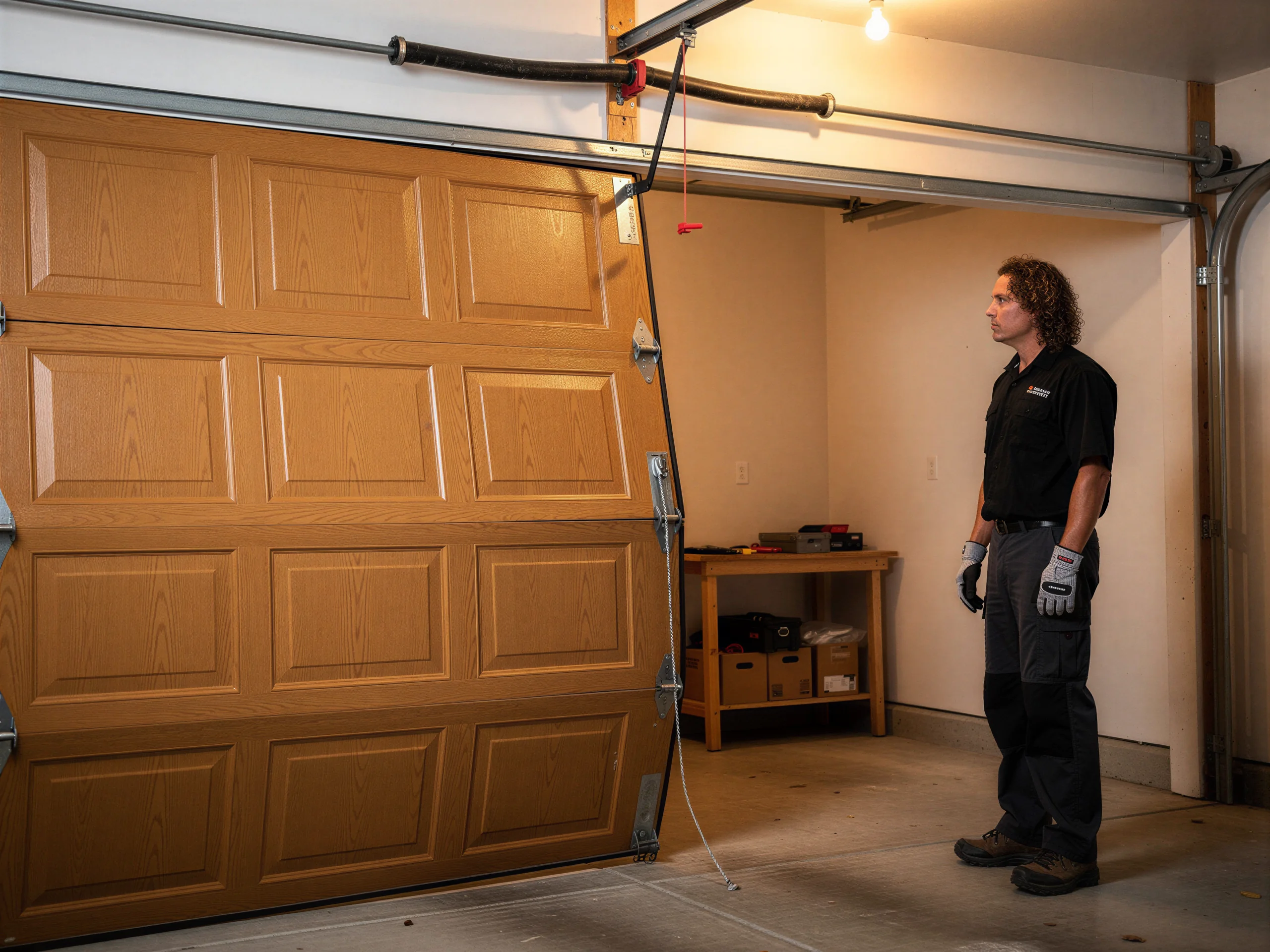
A cable failure doesn't always look like a snapped door crashing down, though that happens too. More often it shows up as a door that hangs crooked - one side noticeably lower than the other when it's partway open, or a door that won't open past a foot or two before the opener strains and stops.
Bang with slack cable
You might hear a loud bang from the garage, usually a spring letting go at the same time as the cable, or you might just notice loose cable coiled at the bottom bracket instead of wound tight on the drum.
Tilted door: stop opener
If your door looks tilted in the track, stop using the opener. Running it against a jammed or unevenly loaded door bends the track and can pull the section apart at the hinge, turning a cable job into a door replacement.
Questions
Common questions
Why did my garage door cable snap in winter?
Cold makes steel cable more brittle right where it bends around the drum, and Syracuse sits in a severe cold climate band that puts cables through decades of hard winter cycling. On older homes with original 1960s or 70s hardware, the cable has usually been fraying at that groove for years before it finally lets go on a cold morning.
Can I open my garage door if one cable is broken?
No. A door with one broken cable hangs unevenly and binds in the track. Forcing it with the opener puts uneven stress on the remaining cable, the rollers, and the track itself, and can bend the track or pull a panel apart. Leave it closed or manually secured until it's looked at.
Do both cables need replacing if only one broke?
Often, yes, especially on a double door where both cables see the same age and the same winters. If one frayed through at the drum, the other one is usually close behind. We'll check the second cable's condition before deciding, rather than replacing it automatically.
Explore more
Explore More Services In Syracuse, NY
Emergency Garage Door Repair in Syracuse
Broken spring or dead opener in Syracuse's cold snap? Learn more →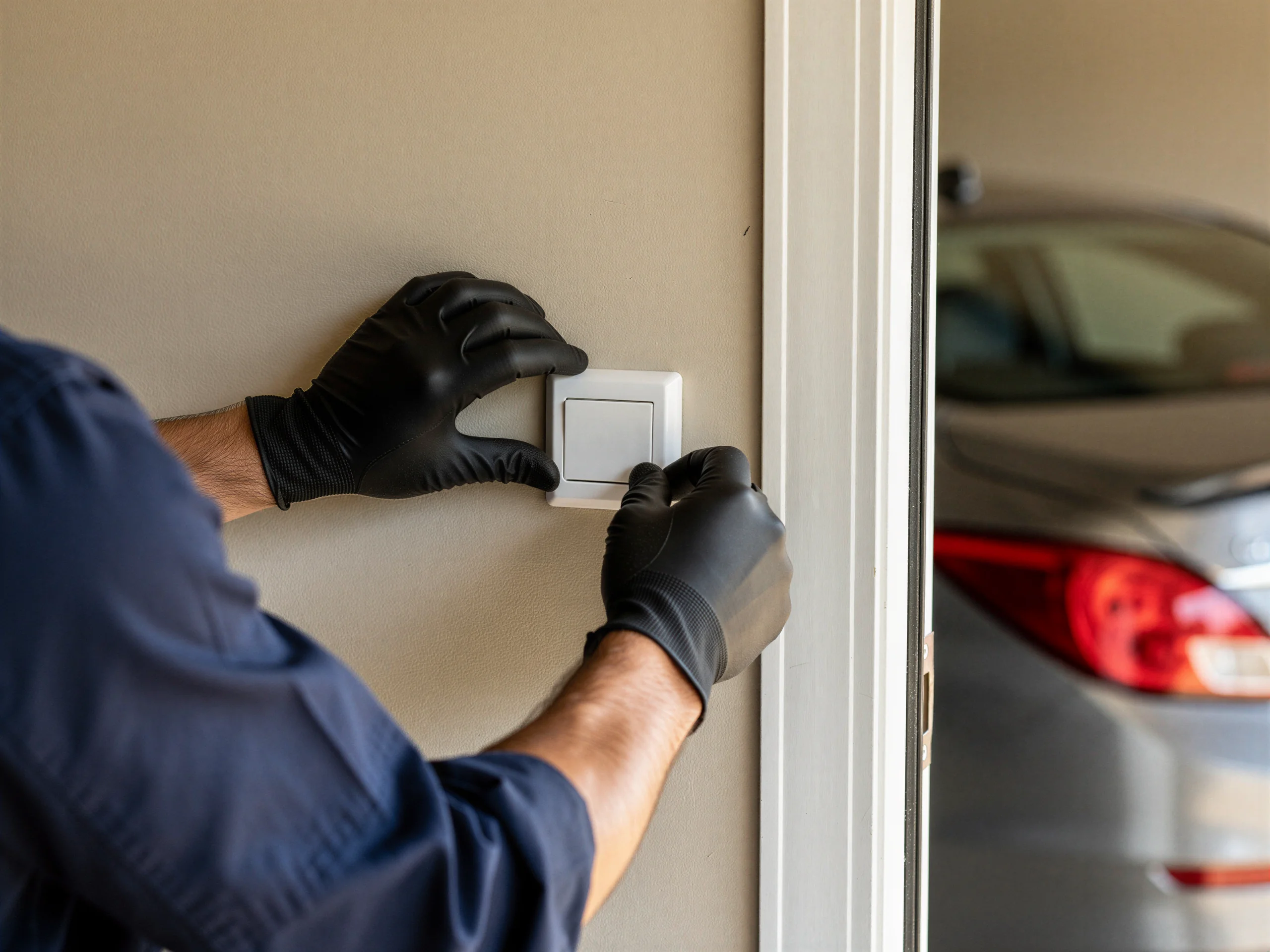
Garage Door Opener Installation for Syracuse Homes
Opener installs and swaps for Syracuse homes built mostly in the 1960s and 70s, sized for cold-band winters and the city's older garage framing. Learn more →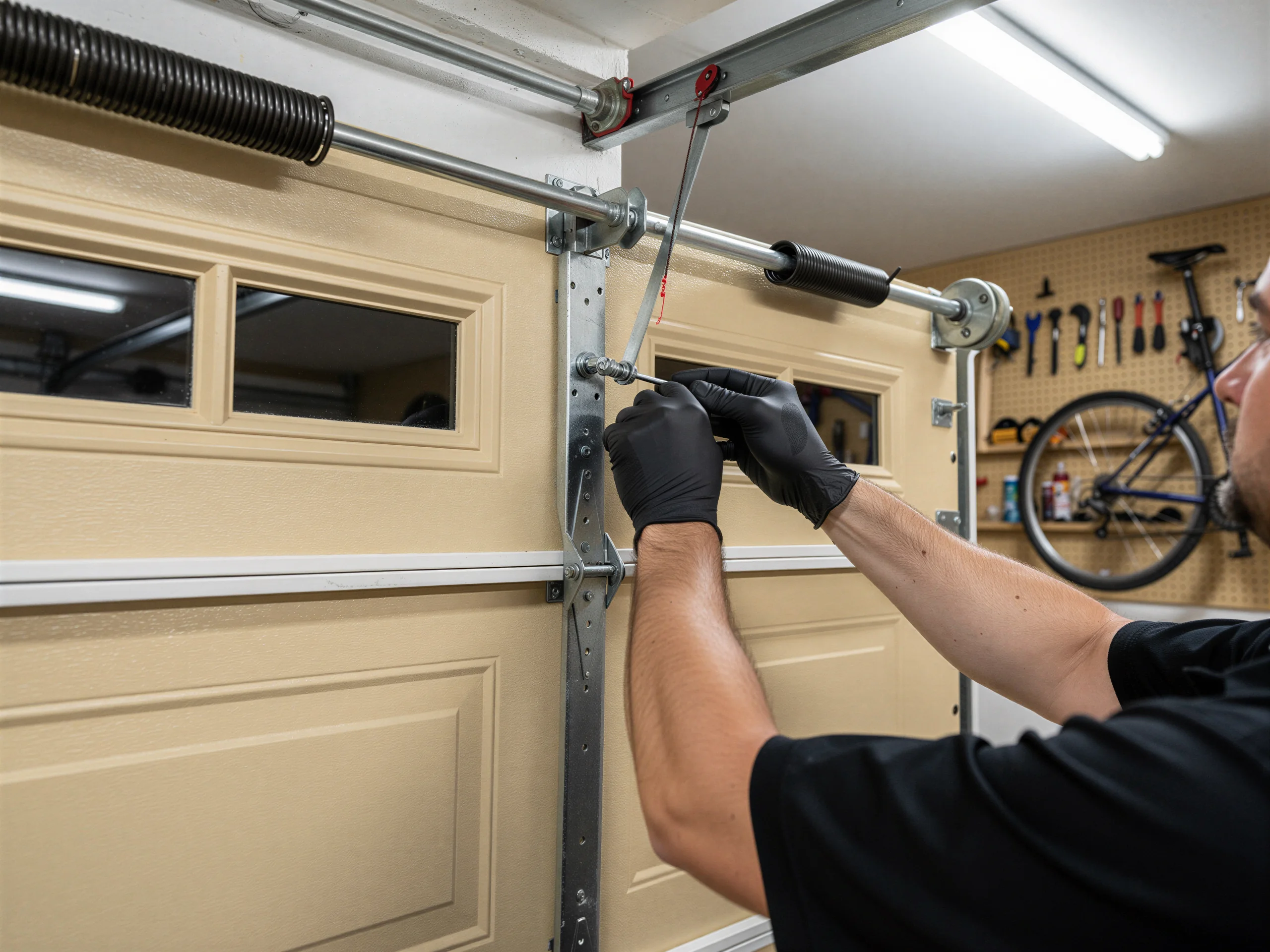
Garage Door Service for Syracuse's Older Housing Stock
Garage door service for Syracuse homes built mostly between 1961 and the 1980s, sized for the cold-climate wear that breaks springs and openers here. Learn more →
Garage Door Maintenance Built for Syracuse's Housing Stock and Winters
Syracuse homes built mostly between 1961 and the late 1970s face hardware fatigue from cold-climate cycling. Learn more →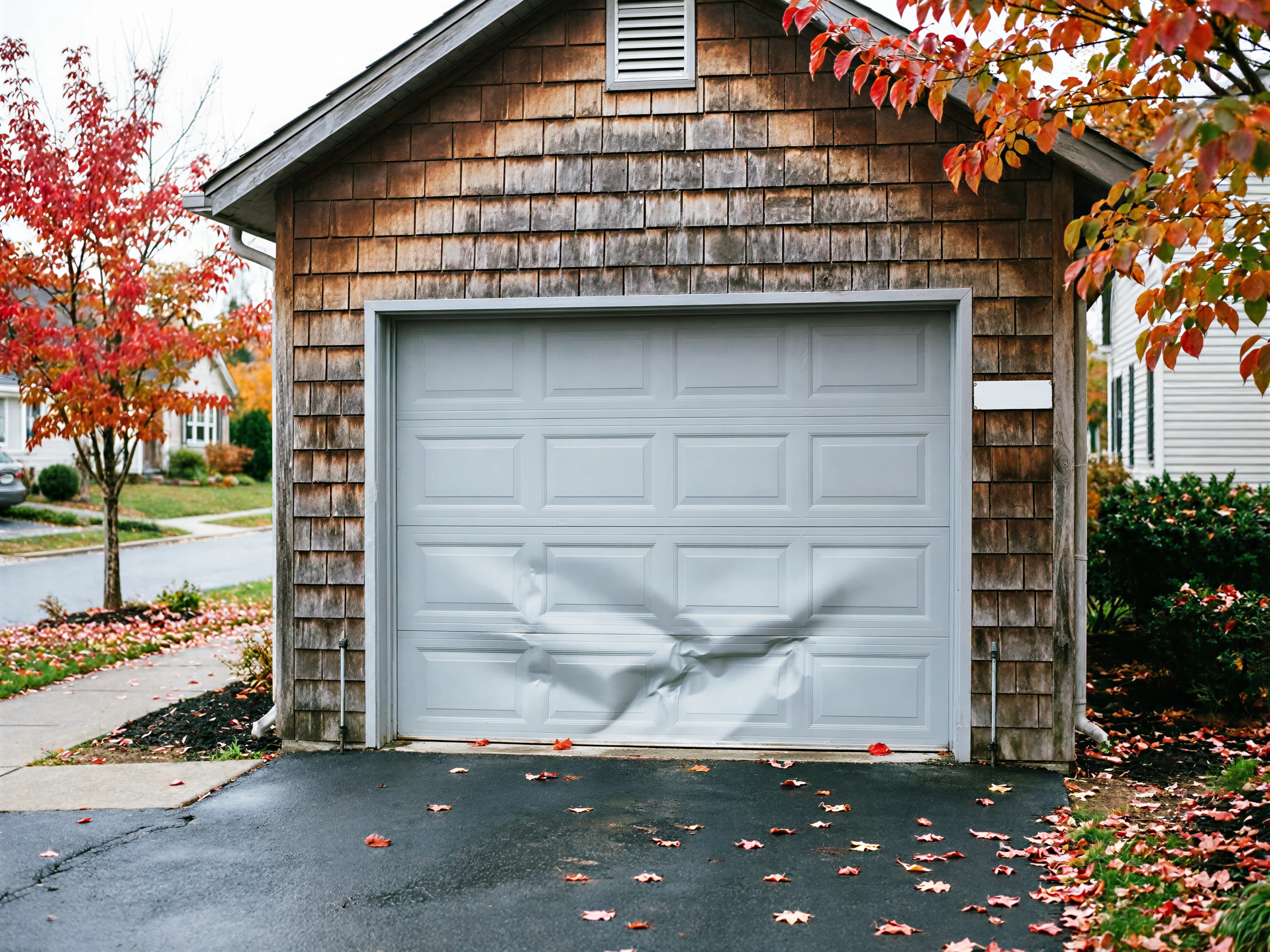
Garage Door Panel Replacement for Syracuse Homes
Panel replacement for Syracuse homes built 1938-1987, where cold-climate dents and rust meet steel sectional doors original to the house. Learn more →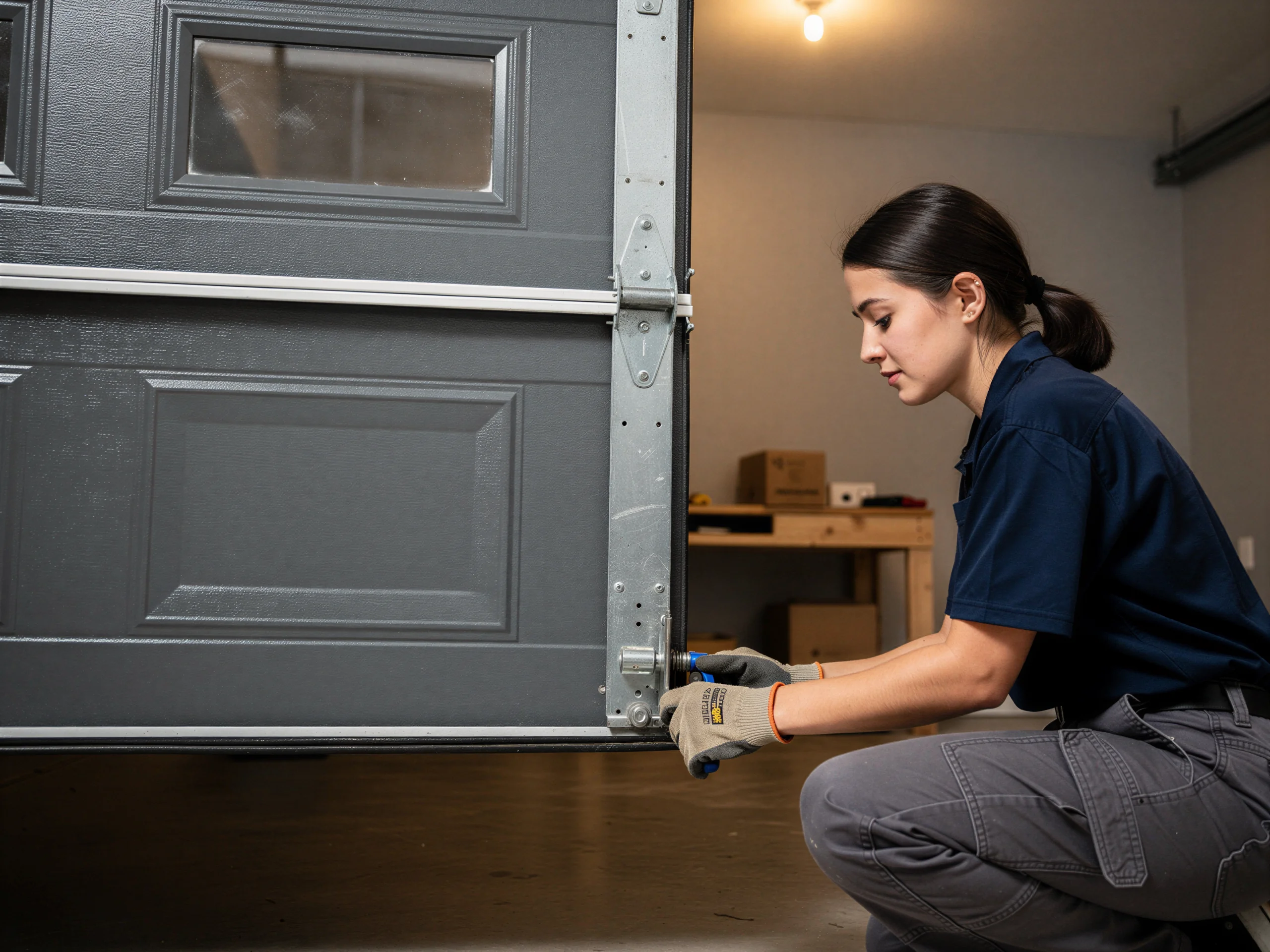
Garage Door Repair for Syracuse's Older Housing Stock
Garage door repair for Syracuse homes built mostly between 1938 and 1987, where cold-climate wear hits torsion springs and original hardware hard. Learn more →Ready when you are
Snapped garage door cable in Syracuse?
Syracuse Garage Door Pros repairs and installs garage doors, springs and openers in Syracuse, NY and the surrounding area.