Local detail
When It Stops Being a DIY Job
If the door won't budge and you can see a gap in the spring above the opening, stop. That's a broken torsion spring, and on the kind of door common across this area - original one-piece or early sectional doors hung on torsion hardware from the 1960s and 70s build boom - the bar holding that spring is under enough tension to break a wrist if you get the winding cone wrong. YouTube tutorials assume newer, standardized hardware. A lot of what's on Syracuse garages doesn't match that assumption, because so much of the housing stock here went up between 1938 and 1987, with the bulk clustered around 1961. Finding a matching replacement spring for 60-year-old drum and shaft sizing isn't always a five-minute parts-counter errand. If the opener motor is straining but the door still moves, that's different - you can often get by a while longer. But a fully broken spring, a frayed cable, or a door that's come off one roller track means calling it in rather than pulling it open by hand repeatedly, which stresses the opener and can bend the track further. We don't recommend torsion spring replacement as a homeowner project on this hardware, full stop.
The area
What Local Conditions Do
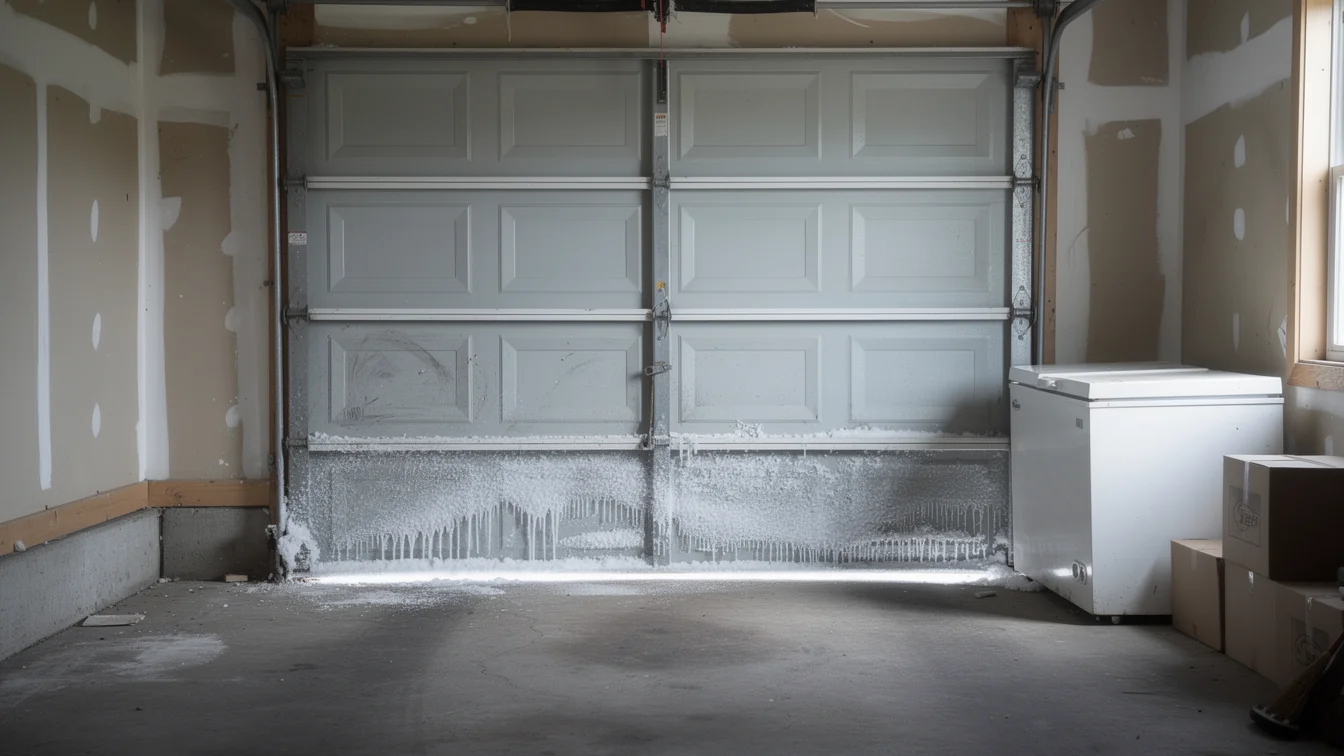
Syracuse sits in a cold-severe climate band, and that matters more for garage doors than people expect. Steel springs lose tensile flexibility as temperatures drop, and repeated freeze-thaw cycling through a Syracuse winter fatigues the coil faster than it would in a milder climate. Grease and lubricant on tracks and rollers thickens in cold air, which makes the opener motor work harder to pull the door up - and a motor working harder against resistance it shouldn't have to fight is exactly what burns out gears and capacitors early. Condensation inside an unheated garage during temperature swings also promotes rust on cables and the bottom brackets, the parts that are hardest to inspect without the door raised. None of this is dramatic on any single day. It's cumulative: a spring rated for a certain number of cycles reaches the end of that life faster here than it would somewhere that doesn't see hard winters. That's why spring failures in this area tend to cluster in the coldest weeks, when a spring that had a little life left finally gives out under the extra strain of cold steel.
What we find
What Is Going On
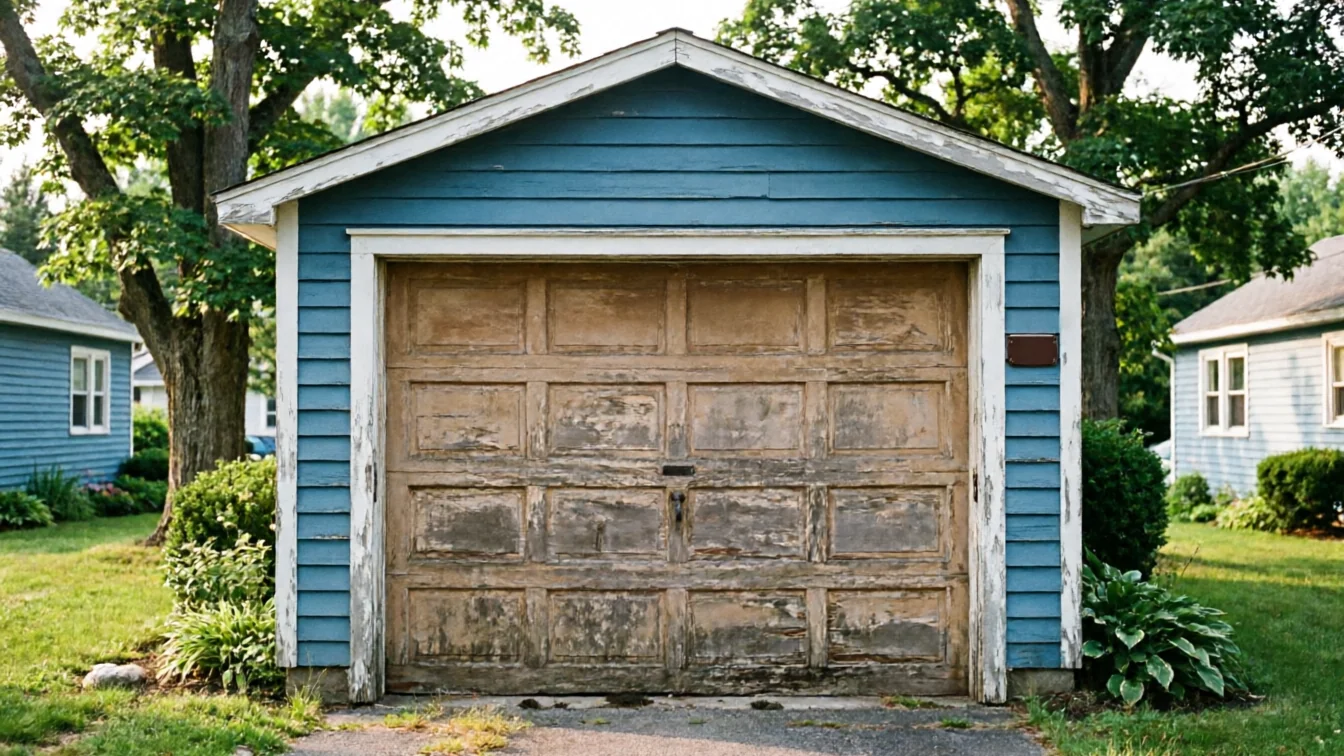
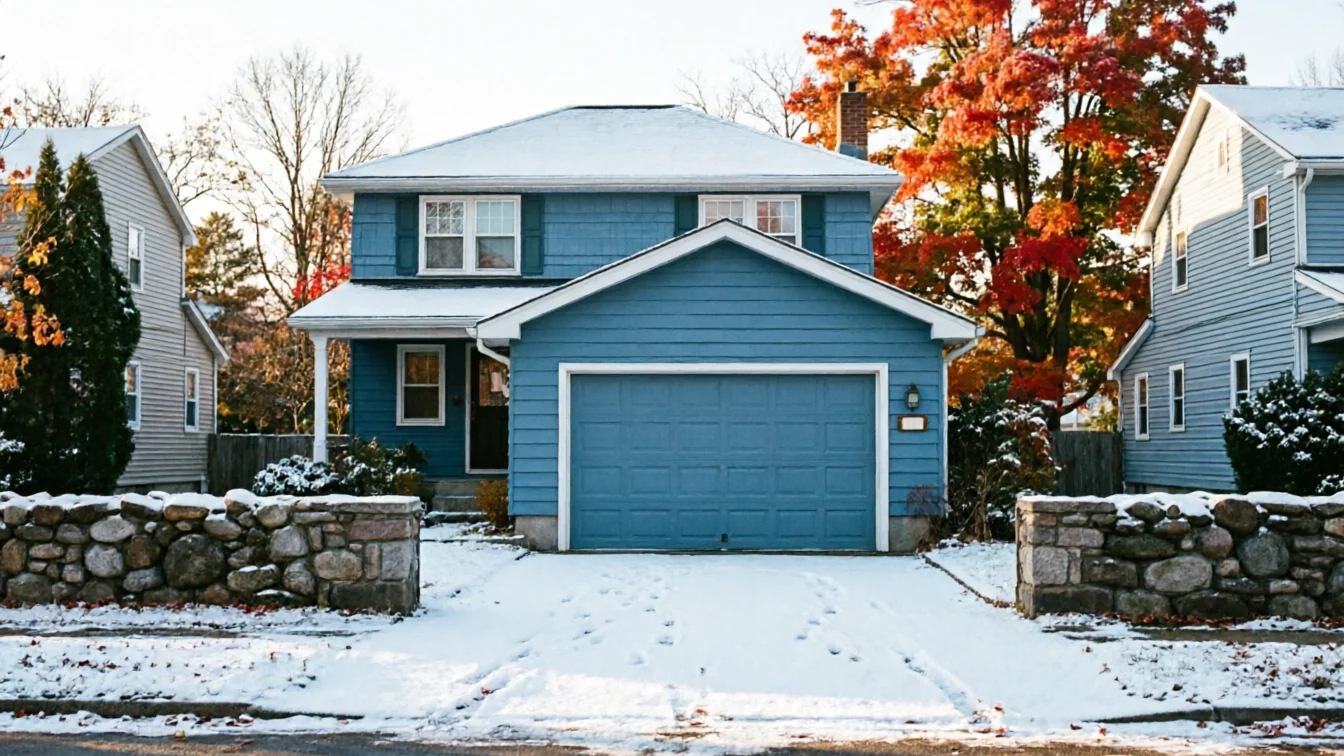
Across the Syracuse area, most of the housing is older than people assume - the median build year lands around 1961, with the bulk of homes dating 1938 through 1987. That means a large share of garage doors and their hardware are either original or are second-generation replacements installed decades ago on openings sized for older doors. Across the 41 named neighborhoods and nearby towns in this service area, from Eastwood and the Northside out to places like Fayetteville and Manlius, you see the same pattern: single-car and narrow double-car openings, side-mounted torsion setups rather than the centered torsion bar common on newer construction, and steel doors with less insulation than what's sold today. When something goes wrong, it's rarely random - it's a spring, cable, or roller that's simply aged out after years of cold-weather cycling on hardware that wasn't built to today's spec. Homeowners in neighborhoods built in that mid-century wave tend to ask the same question: is it worth repairing an old door, or replacing it? With median household income in the area at $76,094 across roughly 135,401 households, that's a real budget conversation, not a hypothetical one, and it goes differently depending on whether the opener, track, or just the spring failed.
How we work
What to Check
Before you call, look at three things. First, the spring itself - torsion springs sit on a shaft above the door; a visible gap in the coil means it's broken, no diagnosis needed. Second, the cables on either side of the bottom bracket - frayed strands or a cable that's come loose from its drum is a sign the whole system is near the end of its life, especially on older hardware common to this area's 1960s-70s housing stock. Third, listen for the opener straining before the door moves, which often means the spring is weakening but hasn't fully gone yet, giving you a little runway. What we won't do is tell you to re-tension or replace a torsion spring yourself - the risk doesn't match the savings, and parts for older shaft sizes sometimes take longer to source than a same-day repair would suggest. If the door is original to a mid-century build and the opener, track, and springs are all original too, replacement often makes more sense than another round of patch repairs once you add up what's failed already.
Talk to a local pro
Garage door trouble in Syracuse?
Same-day service with honest, upfront quotes.