Local detail
When It Stops Being a DIY Job
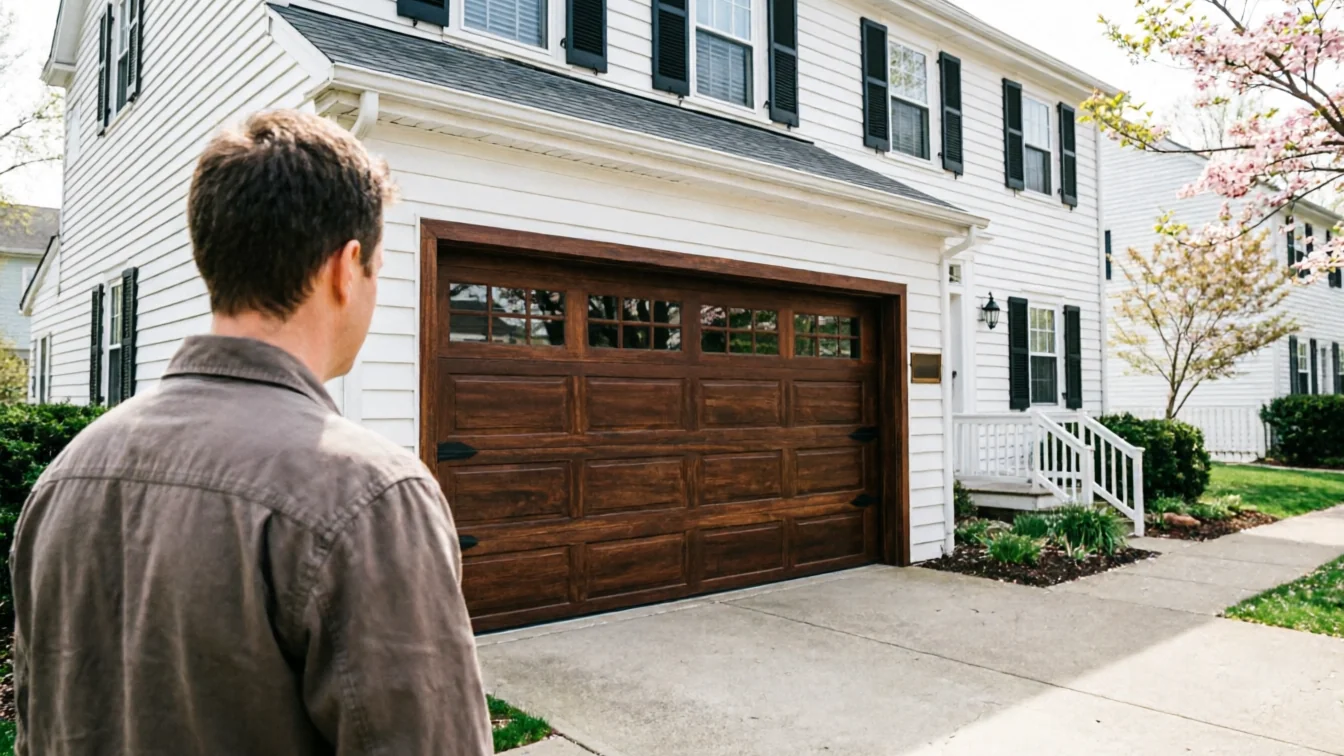
Most houses in this service area went up between 1938 and 1987, with the median landing around 1961. That matters because a door that age has been through sixty-plus winters of steel expanding and contracting, and the torsion spring on it has likely never been swapped. Tightening a bracket or lubing a hinge is fine to do yourself. Replacing a wound spring under tension isn't, and on a house from this era the spring is usually original hardware that nobody stocks off the shelf anymore - we have to match it, not just grab a standard size.
The other line we draw is the opener. If the motor is original to a 1960s or 70s install, the logic board, the safety reversal sensors, and the gear set are all past end of life, and patching one part just means the next one goes in six months. At that point a call isn't a repair, it's a decision about whether to replace the unit. We'll tell you straight when that's where you are instead of nursing an opener along.
A call is also the right move anytime a door won't move at all, because at that point something is under load somewhere in the system and guessing at it from a ladder is how people get hurt.
The area
What Local Conditions Do
This is a cold-severe climate band, and that does specific things to a garage door system that a mild-climate town never deals with. Steel tracks contract in low temperatures, which widens the gap where rollers sit and makes a marginal roller skip instead of ride smooth. Nylon rollers that were fine in October start grinding by January. Lubricant that's too thick stiffens up and makes the opener strain on every cold start, which is what burns out a gear set early.
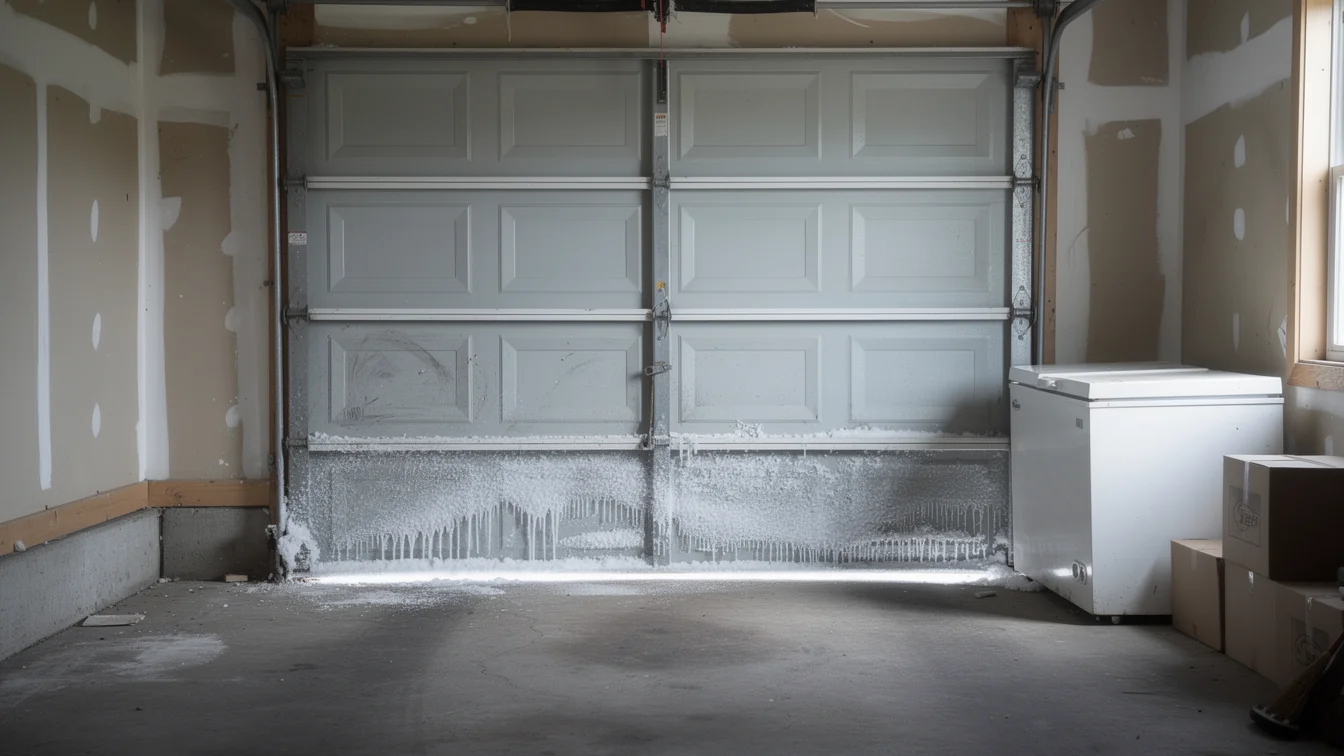
Moisture is the other half of it. A garage that swings from near freezing overnight to above freezing during the day gets condensation on the spring and the track, and bare torsion springs rust from the inside of the coil out, where you can't see it happening until it lets go. On a house with an older door - and a lot of this area's stock fits that description - the spring has already had decades of that cycle working on it.
We see the seasonal pattern every winter: calls cluster hard in the first deep cold stretch, because that's when a spring or roller that was already marginal finally gives out under the extra load of a stiff, cold system.
What we find
What Is Going On
On most calls here, the door itself isn't the problem - it's one of three parts, and which one depends a lot on the house's age. On the 1938-1961 end of the range, we find single-piece wood or early steel doors on side-mounted torsion hardware, an older standard that's harder to source parts for and sometimes makes replacement cheaper than repair once the panel is damaged. On the 1960s-70s stock that makes up most of this area, it's usually a standard torsion spring system, and the common failure is a spring that's cycled out or a cable that's frayed at the drum from years of the spring compensating for cold-stiffened rollers.
On newer builds in this range, closer to the 1980s end, the usual call is an opener logic board or a sensor knocked out of alignment, not the mechanical hardware.
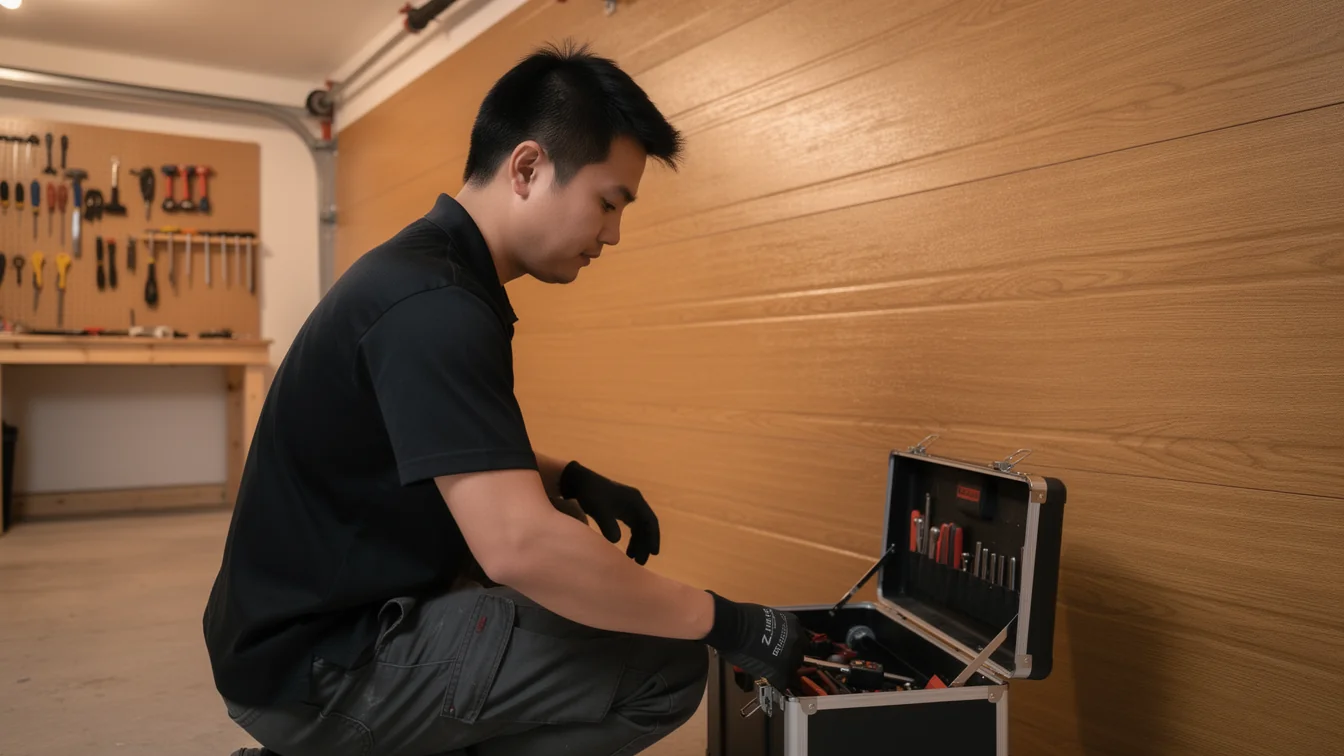
We open every call the same way regardless: check the springs under control before anything else, because a door that's heavy to lift by hand is telling you the spring is already compensating for something. Then tracks, then rollers, then the opener last. Guessing which one it is from the symptom alone is how people replace the wrong part.
How we work
What to Check
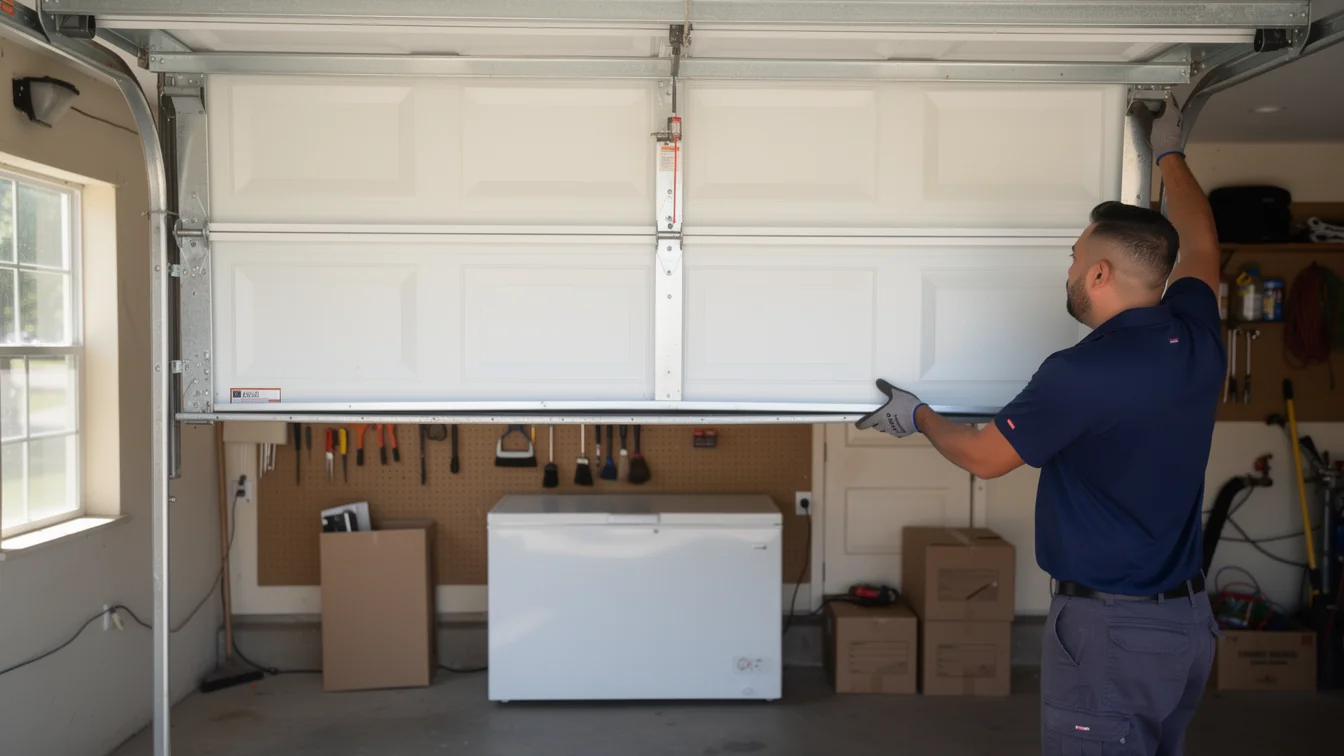
Before you call, there are a few things worth looking at yourself, especially given how many houses here are running decades-old hardware. Disconnect the opener and try lifting the door by hand - it should move with one hand and stay roughly level when you let go partway. If it's heavy or drops, that's the spring, and that's not a DIY fix.
Look at the rollers while the door is open. In this cold-severe climate, worn nylon rollers show up as a visible flat spot or a grinding sound in winter specifically, even if the door ran fine in summer. That's a part we can usually swap same visit.
Check the cables at the bottom corners for fraying or rust, particularly if the door hasn't been serviced in years - common on original hardware from the 1960s-70s builds that make up most of this area's housing stock. And check the weatherstrip at the bottom; in a climate this cold, a gapped or cracked seal is what lets frost and wind into the garage even when the door itself is working fine.
If any of that turns up a spring, cable, or a dead opener board, that's the call - not the lift test.
Talk to a local pro
Garage door trouble in Syracuse?
Same-day service with honest, upfront quotes.