Local detail
When It Stops Being a DIY Job
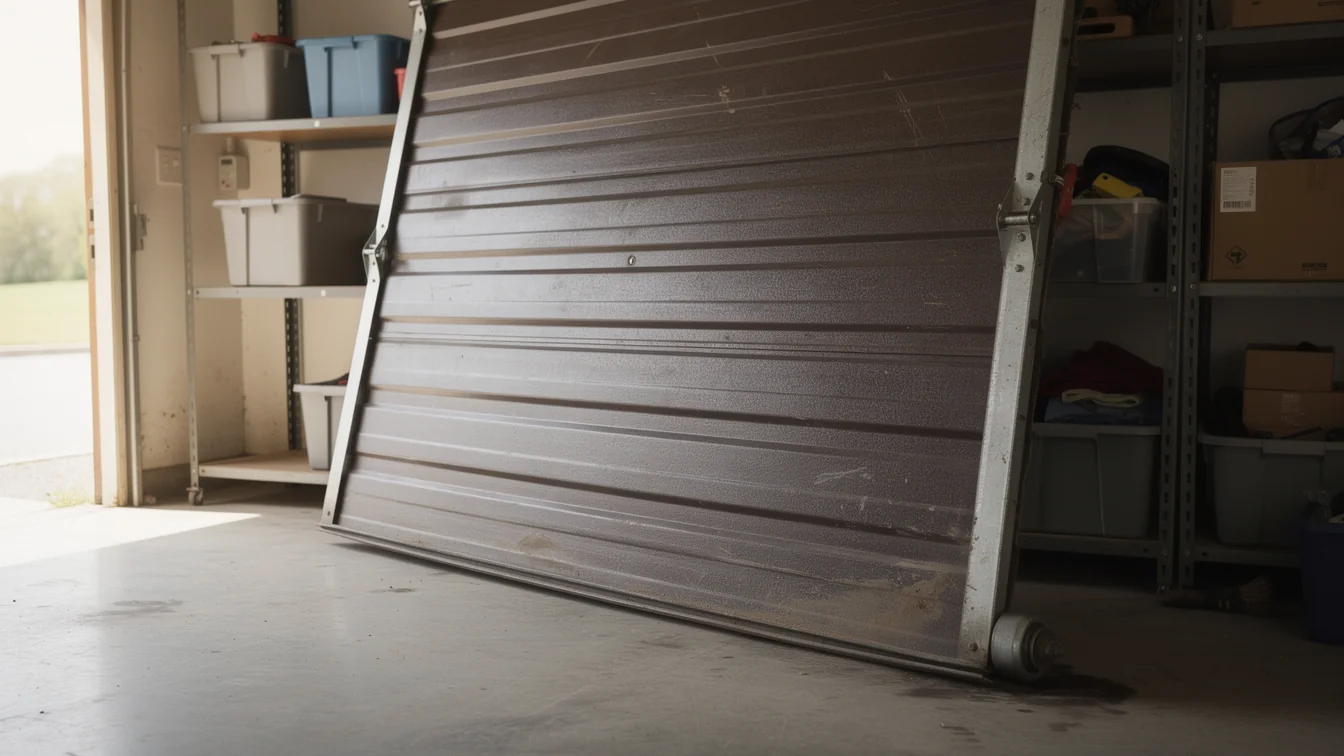
If the door is hanging at an angle, if a roller has popped clean out of the track, or if you hear a cable has gone slack, stop opening and closing it by hand or by the opener. A door on a bent or separated track can drop without warning, and on the older torsion and extension setups still common in houses built in the 1938-1987 window that makes up most of this area's stock, the spring and cable are usually under more load than people expect. Tapping a track back into rough alignment with a mallet is sometimes fine for a minor bow. It is not fine once a bracket has pulled away from the wall or the track itself is bent rather than just knocked loose - at that point you're replacing hardware, not adjusting it, and forcing the door through a cycle risks the panel or the opener gears. We don't recommend homeowners climb a ladder to rehang a door on a two-car opening; the panels are heavier than they look and the spring tension on original 1960s-70s hardware is unpredictable if it hasn't been serviced. If your house falls into that median-1961 build era, assume the track brackets are original until someone tells you otherwise.
The area
What Local Conditions Do
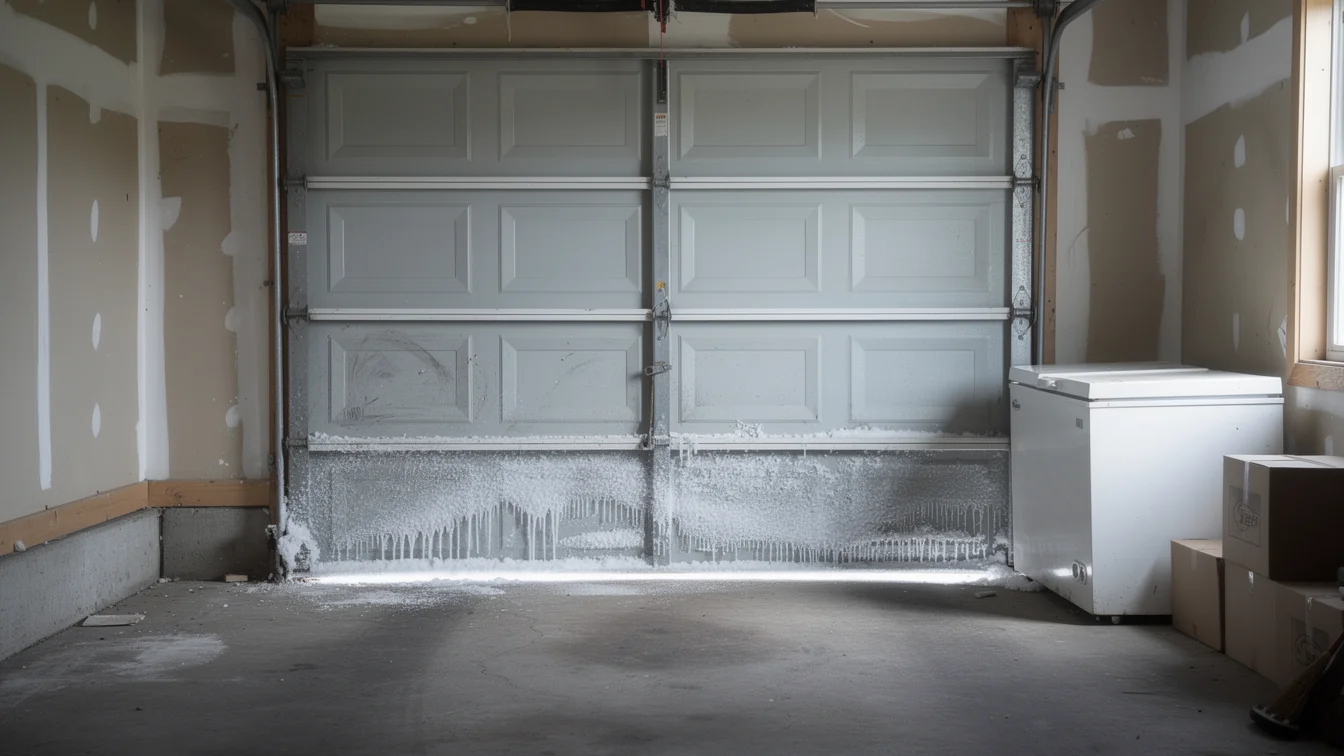
Syracuse sits in a cold, severe climate band, and that matters more for track alignment than most people think. Repeated freeze-thaw cycles move concrete slabs and the wood framing around garage openings, which shifts the vertical track position by fractions of an inch at a time. On a door that's forty or fifty years old, those fractions add up to a track that's no longer plumb, so the rollers ride the edge instead of the center and eventually jump out. Road salt and slush tracked in off the driveway also work on the galvanized coating of older rollers and track sections, speeding up corrosion at the exact spots where panels are built in the 1938-1987 era rather than updated nylon rollers. None of this is a defect in the door - it's what forty-plus winters do to steel and wood that were never designed to be replaced on a schedule.
What we find
What Is Going On
Most off-track calls in this area come down to one of three things: a roller has worn down or cracked and no longer sits square in the channel, a track bracket has loosened from years of vibration and seasonal movement, or the door was struck - a car bumper, a bike, a gust catching it mid-cycle. Houses across the 41 named neighborhoods and nearby communities in this service area share a similar housing age, so the pattern repeats block to block: original hardware from the 1960s and 70s, worn rollers, brackets that have backed out of framing that's shrunk and swelled with forty winters of freeze-thaw. Less often, it's a spring that's lost tension unevenly on a double door, pulling one side faster than the other until the panel binds in the track and forces itself sideways. Each of these has a different fix, and guessing wrong means paying twice.
How we work
What to Check
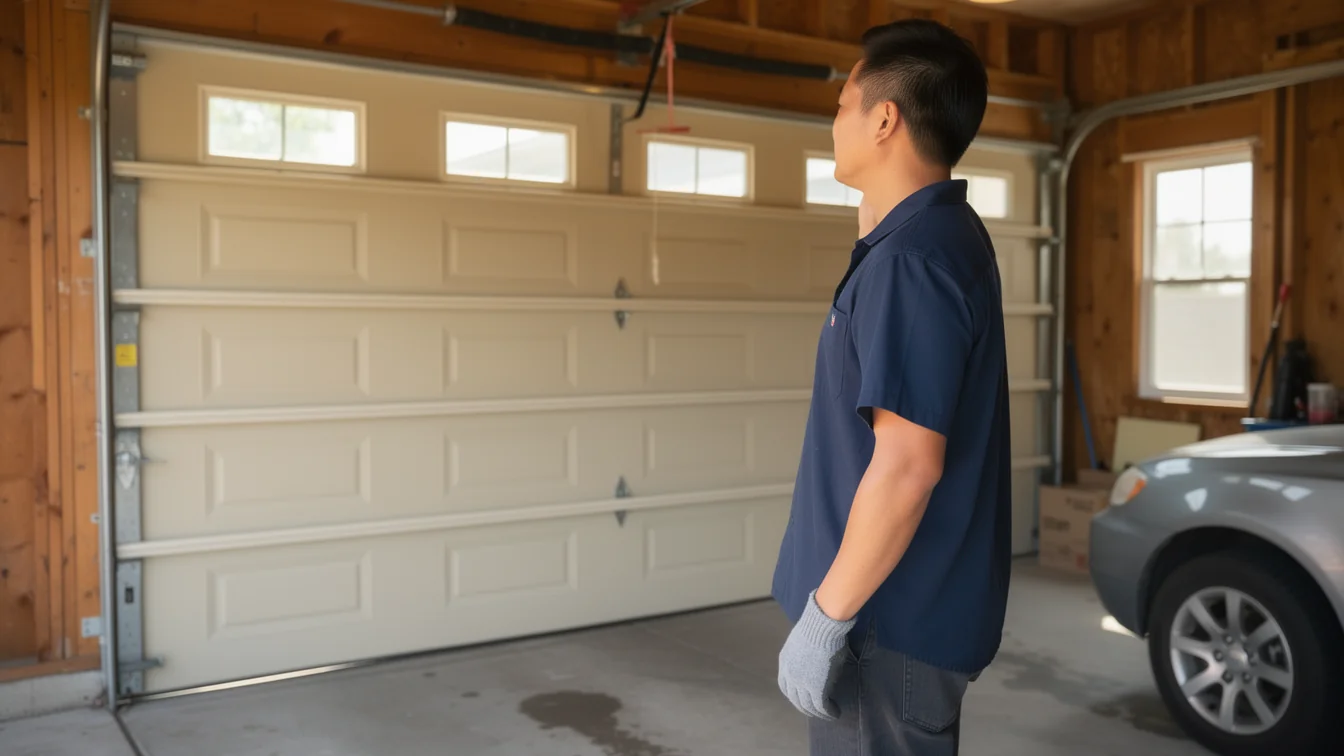
Look at the track first - run your eyes down both vertical rails for a bend, a gap at a joint, or a bracket pulling away from the wall. Check the rollers next: if you can see flat spots, rust pitting, or a roller that's missing its wheel, that's your answer. Listen for a grinding or popping sound right before the door sticks, which usually means metal is dragging on metal where a roller should be turning freely. If the door looks level but one side closes slower than the other, that's often a spring issue, not a track issue, and it needs a trained hand rather than a tightened bolt. Given that most homes here date to the 1938-1987 period, we'd rather replace worn original hardware with modern rollers and brackets than patch it repeatedly - on a door that old, patching usually costs more over two winters than doing it right once.
Talk to a local pro
Garage door trouble in Syracuse?
Same-day service with honest, upfront quotes.