Local detail
When It Stops Being a DIY Job
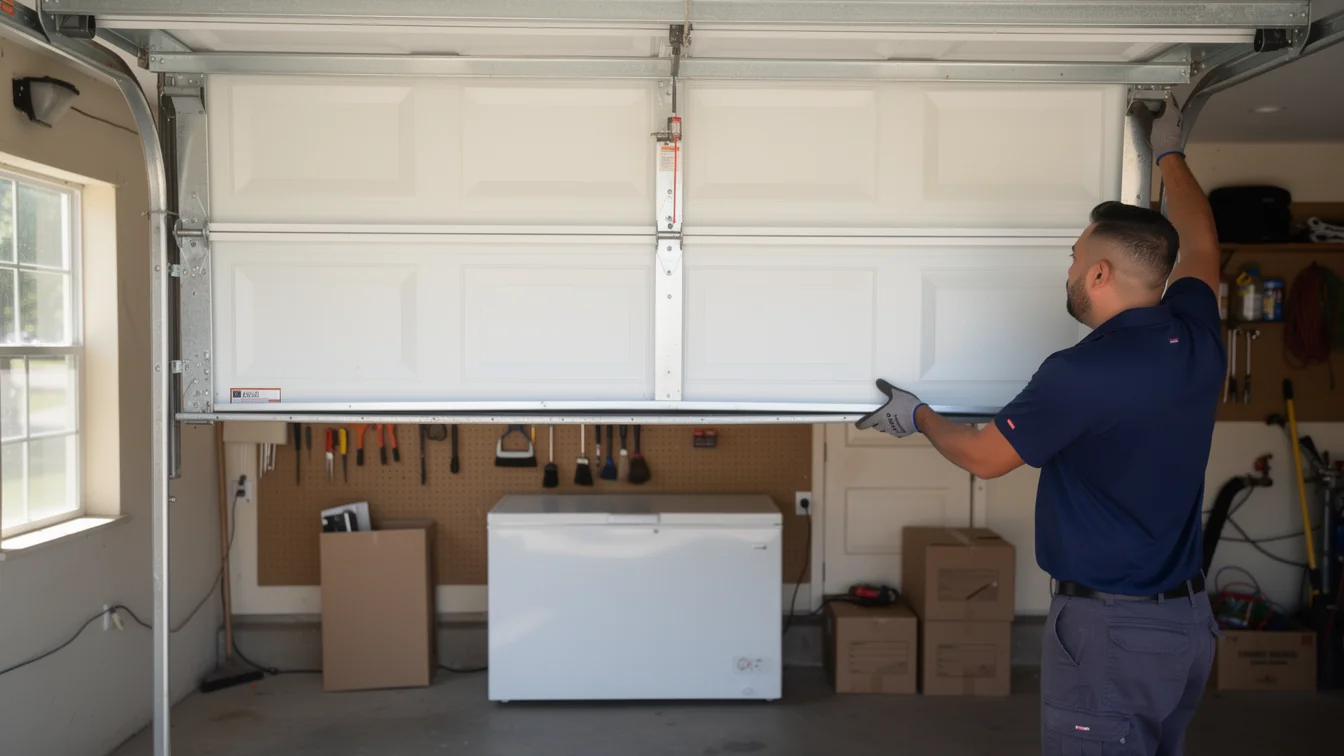
If your door is slow to open, makes a grinding noise, or one side drops faster than the other, you're past the point of a YouTube fix. That matters more here than it would somewhere with newer housing stock, because most homes across the Syracuse service area were built between 1938 and 1987, with the median landing around 1961. A door that age has torsion hardware that's been wound and unwound tens of thousands of times, and the galvanizing on the spring coils thins out long before the spring visibly breaks.
A broken torsion spring on a double door is not a tighten-a-bolt job. The spring is under enough stored tension to cause a real injury if it lets go while you're working on it. Same goes for a snapped cable on a door that's still partway up - the door is no longer balanced and can fall. If you hear a bang and the door won't budge, stop and call. If it's just a squeak or a slow roller, that's maintenance, not an emergency, and we're honest about the difference.
The area
What Local Conditions Do
Syracuse sits in a severe cold climate band, and that shows up in specific ways on an old door. Steel contracts in deep cold, which tightens tolerances on tracks that were already set decades ago for a house built around 1961. A track that's a sixteenth of an inch out of plumb in July can bind a roller in January.
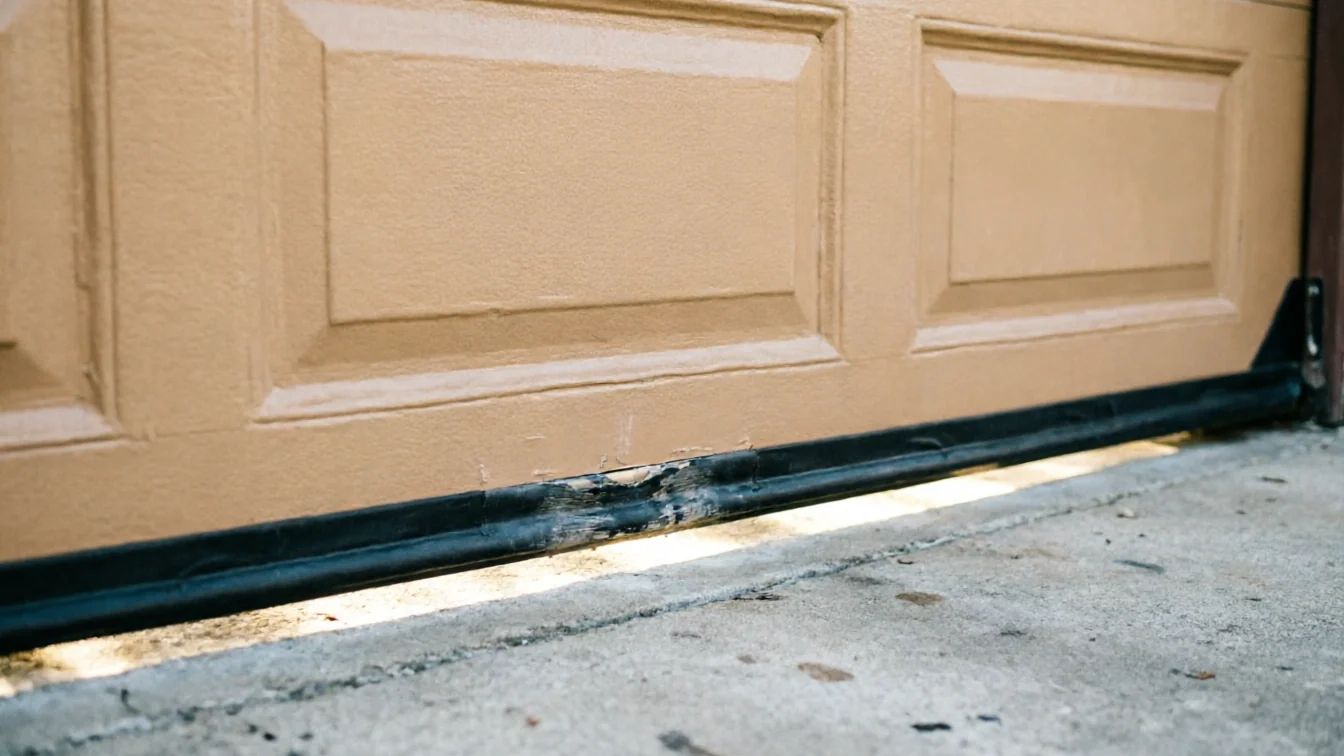
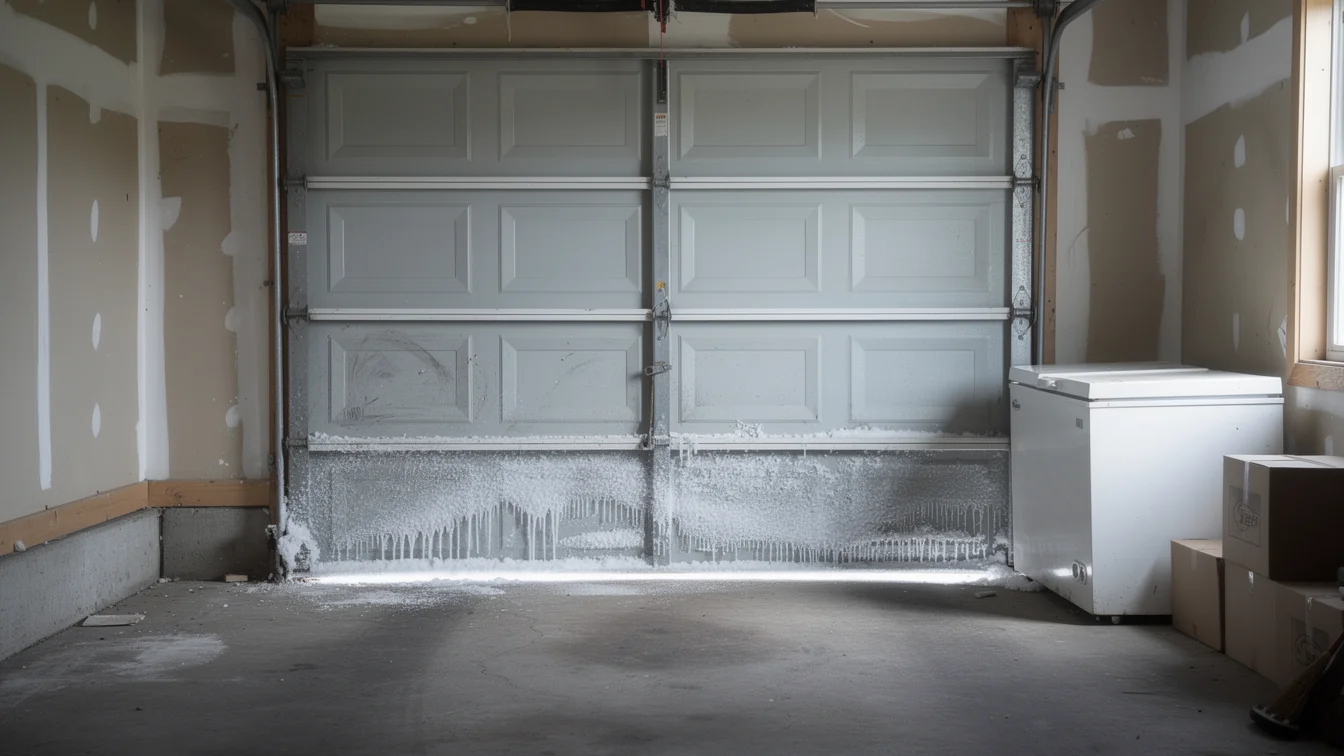
Weatherstripping on a door from that era was rarely replaced on schedule, and once it hardens and cracks, cold air gets behind the bottom panel and the door frosts on the inside. We also see nylon rollers that go brittle and chip in cold snaps, and lift cables that have surface rust from years of condensation cycling in an unheated garage. None of this is dramatic failure - it's slow wear that shows up as a door that's harder to lift every winter until one day it isn't lifting at all.
What we find
What Is Going On
Across the 41 named areas we cover - from Westside and Eastwood close to downtown out to places like Camillus, Manlius, and Baldwinsville - the building wave was concentrated in the 1960s and 70s. That consistency means we see the same handful of failure patterns on repeat calls: original torsion springs well past their wind-cycle life, steel tracks warped from decades of seasonal contraction, and openers from a later retrofit that were never matched to the original door weight.
With 75,232 owner-occupied houses across the service area built mostly in that window, worn springs and pitted tracks aren't the exception, they're what we expect to find. What's different house to house is how well the door's been maintained since - some owners lubricate hardware every fall, most don't, and that gap is usually the difference between a $150 tune-up and a full spring replacement.
How we work
What to Check
Before you call, look at a few things yourself. Check the bottom weatherstrip for cracks or gaps - if daylight shows through, cold air is getting in and the seal needs replacing before winter, not during it. Look at the torsion spring above the door; if you see a visible gap in the coil, that's a broken spring and the door should stay closed until it's fixed.
Listen for grinding when the door moves - that's usually a dry or worn roller, not the opener motor. Check that the door reverses when it hits resistance near the floor; a safety sensor that's misaligned or dirty is a quick fix, but one that's failing outright isn't something to ignore given how many of these doors are original to a house from the 1960s. If the door feels heavier to lift by hand than it used to, the spring is losing tension, and that's worth a call before it snaps on its own.
Talk to a local pro
Garage door trouble in Syracuse?
Same-day service with honest, upfront quotes.