Local detail
When It Stops Being a DIY Job
If your opener hums but the door doesn't move, or the motor runs and the carriage just sits there, that's usually past the point of a homeowner fix. Syracuse's housing stock runs 1938 to 1987, with a median build year of 1961, and a lot of those openers have been swapped at least once since, often onto original track and hardware that was never sized for a modern chain-drive unit. When the mounting bracket is original but the opener is newer, mismatched hardware is common, and forcing it can bend the rail or strip the trolley. If you smell something hot near the motor housing, or the door drops suddenly when you pull the manual release, stop and call. That's a spring or cable problem riding along with the opener issue, and those two together aren't a weekend project.
The honest limit here: if your opener is original to a 1960s build and a replacement part isn't stocked anymore, we're not going to chase a part that doesn't exist. At that age a full opener swap usually costs less than the labor to keep nursing the old one.
The area
What Local Conditions Do
Syracuse sits in a cold climate band with severe winter conditions, and that matters more for openers than people expect. Cold doesn't just slow the motor - it changes how the safety sensors and limit switches behave, and it stiffens the grease in older gear sets that were never rated for the kind of repeated freeze-thaw cycling this area gets. Houses in Westside, Eastwood, and Northside built in that same 1960s-70s window tend to have detached garages or unheated attached bays, so the opener sits at outdoor temperature most of the winter. That's a different load than an opener in a heated space, and it shortens the working life of capacitors and drive gears.
Power cuts compound it. A battery backup that's been sitting in an unheated Syracuse garage loses capacity faster than one in a conditioned space, so when the grid drops during a winter storm, a backup that tested fine in October can fail by January.
What we find
What Is Going On
Most of the openers we see fail in one of three ways tied directly to this climate and this housing age. First, limit switches drift out of calibration faster when the unit cycles through hard freezes, so the door reverses early or doesn't fully seat. Second, the drive gear - a small plastic part inside the motor housing on most chain and belt units - gets brittle with age and cold, and it's usually the actual point of failure when the motor runs but nothing moves. Third, in homes with the original 1960s-era wiring still feeding the garage circuit, a power cut followed by a hard restart can trip a breaker that wasn't sized for today's draw.
None of these are about the brand of opener. They're about a 60-year-old structure carrying newer equipment through winters this cold, which is a different problem than what you'd get in a warmer climate or a newer subdivision.
How we work
What to Check
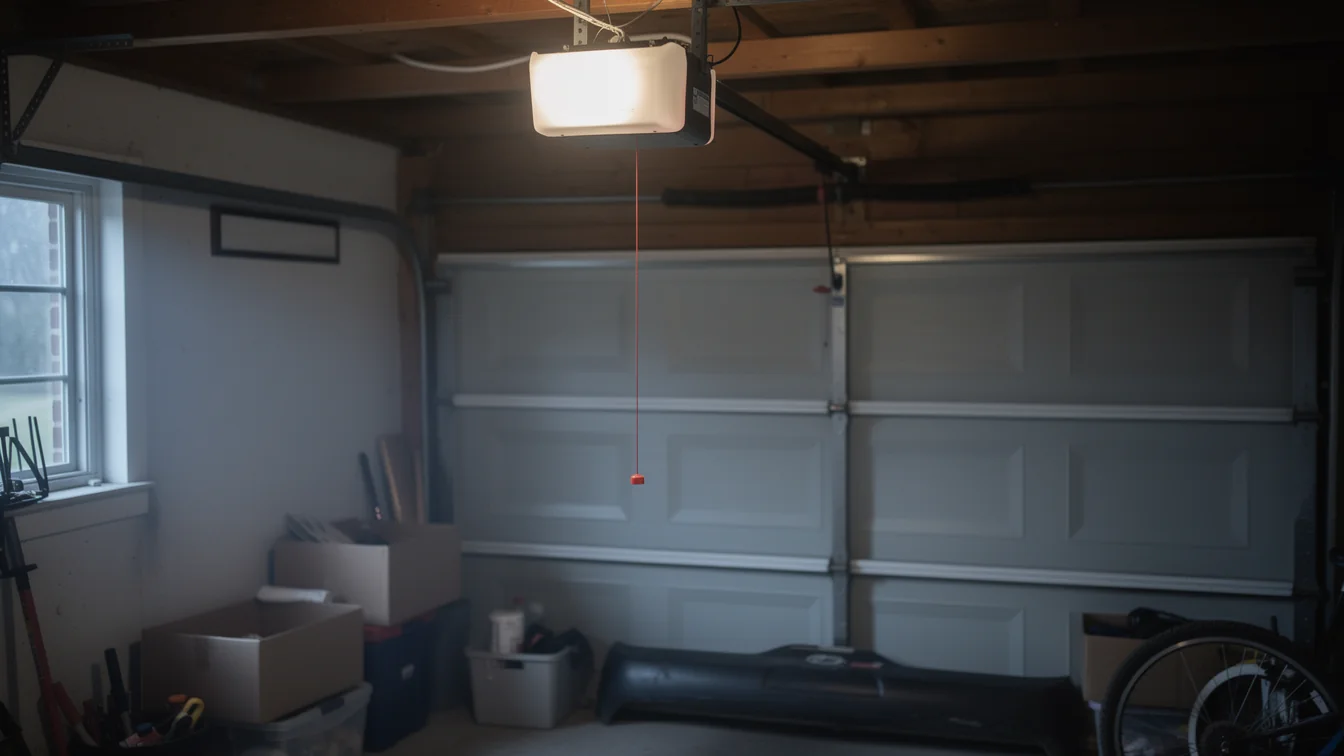
Before you call, check three things. Pull the manual release cord and see if the door moves by hand - if it's heavy or won't budge, that's spring tension, not the opener, and it's not a DIY fix. Second, look at the wall control unit for a blinking light pattern; most units flash a code when a limit switch or sensor is out of range, and that code tells a tech what to bring on the truck instead of guessing twice. Third, if you've got battery backup, check the manufacture date on the battery itself - in an unheated Syracuse garage, three years is often the real ceiling, not the five years printed on the box.
If none of that turns anything up and the door still won't respond after a power cut, the issue is probably in the logic board or the drive gear, and both need a tech on site rather than a part off a shelf.
Talk to a local pro
Garage door trouble in Syracuse?
Same-day service with honest, upfront quotes.